I Burned Out. And Then...

This was worse than when I had Covid.
It started as just another back ache. Then the pain spread through my abdomen, then across my nerves in my torso, my chest, shoulder and throughout the entire left side of my body.
Turns out I had shingles. It was the most painful few weeks I can remember. Then it was followed by a sinus infection. And then more back pains.
I’m mostly recovered now. But it has me wondering: Why, at the age of 41, at a time when I’ve been healthier and more fit than ever did I start experiencing physical health issues like I’ve never had before?
Was this burnout?
I’m not sure. Maybe. But one thing I’m almost certain of: It was brought on by stress.
Stress caused by the pressure that I put on myself to succeed in my business. Pressure to find product-market-fit. Pressure to hit that next sales target. Pressure to work late nights and weekends. Pressure to ship. Pressure to grow my business before my time runs out.
Can you relate? If you’re like most entrepreneurs I know, or if you’re like me, then you’ve probably developed an unusual relationship to stress.
We plow through the mental, emotional, and physical stress that comes with starting a business and chasing that next level of success. We take it as just part of the territory of being an entrepreneur.
We build a tolerance for it. But not in a way that makes us stronger or more resilient.
No. If I learned anything from my recent brush with burnout it’s this: When we take on more stress, we take on more risk.
Is success without pressure possible?
So here’s my question: Is it possible to achieve success in business without putting so much pressure on ourselves? Can we achieve success without putting ourselves through so much stress?
I’m going to apply these questions to the 3 areas of my business that I’m working on this year:
My consultancy
My content creation business — this YouTube channel.
My portfolio of software products
I want to see if I can build my businesses by finding ways to reduce pressure and avoid stress.
My hypothesis? I think can be successful—not despite taking a low-pressure approach but because I’m taking a low-pressure approach to my business.
Low-pressure consultancy
This year I returned to consulting for the first time in years. And I already noticed a few ways that a consulting business like mine can generate unwanted and unnecessary stress.
You see, I work best when I’m focused on product UI and UX design. I’m fast and I deliver a lot of value when I’m delivering my design work in front-end HTML and TailwindCSS. This is what I’m best at and it’s where I deliver the most value for my SaaS clients.
I also thrive in building totally new products — MVPs — from the ground up.
But when I’m brought in to work on the back-end of an existing product, or work in a tech stack that’s unfamiliar, me and my team are just not as efficient. We work slower, we don’t add as much value, and it’s a less profitable service for my consultancy to offer.
So the takeaway here is that we take on more pressure and more stress when we take on projects that don’t play to our strengths.
Here’s another way that pressure builds up in a consultancy business:
You can find some success pretty quickly, which leads to 2 good problems to have:
Either you need to stop selling because you’re fully booked, which adds a ceiling to your ability to earn more.
Or you keep selling and taking on extra projects, which drives up your working hours to 50, 60, 70 hours a week. Nights, weekends, long hours.
In a previous business, which was selling services, I figured out how to be able to keep selling more work, and actually reduce my hours I spent working in that business.
The key is to get comfortable with delegating and hiring teammates. I took my business from just me to over 25 team members serving more and more clients consistently.
This year, my consultancy is still pretty small—and I like it that way. But I’m already putting some pieces in place to be able to scale this business without adding pressure and stress.
I currently have one back-end developer on my team who helps me execute full stack product builds.
And I have a small network of talented, full stack product designers and developers who have similar skills to me, who I can bring into the fold when taking on multiple big projects at once.
So the key is to have a plan for how you will scale (the success) of your service.
Low-pressure creator
This YouTube channel is my creator business, where I’m working on growing an audience of full stack product designers, developers, and founders, like myself.
And as I’ve been creating new content this year, I found 2 sources of pressure that add stress to this whole endeavor:
The first has to do with the topics that I choose to create videos for.
You see, I am full stack when it comes to creating products. I design, I code, I do sales, I market my products, I manage my team. So I have lots of skills in my toolbelt. And having this type of toolbelt as a full stack founder is what this channel is all about.
But I found that when it comes to teaching technical topics, coding specifically, I’m probably not the best person to be creating that content. For me, the process of preparing a coding lesson, delivering it and making it clear and actionable takes a lot more work and just feels like a grind for me. I’d rather help you guide your path and point to lots of incredible YouTubers and courses and books out there that will do a much better job of delivering technical coding tutorials.
As a creator, I’m finding that topics like this once, where I’m talking about business, strategy, mindset, and product come much more naturually to me. Now I’ll show you parts of my code and the tools I use as I show you my process for bringing products to market.
But the key takeaway here is similar to the point about focusing on your strengths as a consultant — the same is true as a creator. I’m focusing on topics where I feel like a natural communicator and teacher.
Here’s another one that’s particularly hard to pull off here on YouTube.
In this space of entrepreneurship, and startups, and products, and marketing — there’s a lot of content that comes off as boastful or borderline scammy. You know what I’m talking about:
The titles that promise you an easy way to make lots of money
The thumbnails showing a pile of cash
The promises of how simple or fast it is to start or grow a business
I’m not saying there aren’t some pretty good insights you can find inside content like this, when you look past these cringey titles and packaging.
But for me, coming with that type of vibe just isn’t authentic to my personality. And if I were to go after those views by being inauthentic, I’d be adding a lot of unwanted pressure and stress for myself as a creator. So you won’t see me bragging about how much money I made or telling you that building a business is easy, because it’s not.
My hope is to share and pass along my real experience in business and products, while keeping it interesting and worth clicking on and subscribing to my channel.
Low-pressure products
And finally, let’s talk about my products. Because this is the area where I recently experienced the most pressure and stress, which led to my burnout.
And coming out of that experience, I realize now where I took the wrong approach.
A couple years back, I decided to go “all in” on a single product, a SaaS software product.
And I mean really going all-in. I sold all of my prior businesses, including the one that was covering my income. Then I used some of the money from that sale and I took on a bit of investment to pad my runway to making this one SaaS product work.
That decision—to go “all in” on that one product—added a new level of pressure that I hadn’t really experienced before in my 15 years of being an entrepreneur.
Let me be specific:
It meant that for several years I operated this business without turning a profit. And this was by design. I was working with a runway to get to profitability.
But even though I had plenty of cash in the bank to cover that runway, it just didn’t feel right to me. I come from the school of bootstrapping. You know, self-funding from the revenue from customers. And any month where we’re burning more cash that we’re taking made my stress levels rise.
And that added more urgency to ship new features in our product—fast. Before we run out of cash and time. So that meant pushing myself to work extra hours every week, and weekend andn even during my family’s vacations.
Then there was the self-doubt. Because of the timeline urgency to reach profitability, that meant that every decision I made was critical. I would constantly second-guess my own decisions, scrutinizing whether I chose to work on the right things that will give this business the best chance of success.
Meanwhile, there was a heavy dose of FOMO—fear of missing out. Because I want “all in” on this particular product idea, I forbit myself to consider any and all other opportunities. No shiny object ideas. No experiments. No exploring other product ideas that could potentially grow faster than this one.
All of that layered on the pressure and stress and I didn’t even realize it until my body started to physically break down and I experienced what I think was burnout.
And so this year, I course corrected.
Now I’m back to my roots. I’m slowly building my products portfolio with a zero-pressure mindset.
I’m no longer “all in” on a single product. I’m intentionally not focusing all of my resources and all of my chips on one bet. That might seem counter-productive, but here are the benefits that I’ve unlocked:
I removed all urgency and pressure to make a single product reach a level of profitability before a specific deadline approaches. In other words, I’m free to let my businesses take as long as they’re going to take to grow.
It means I can explore new ideas and new products whenever they come along, without feeling guilty for letting one product coast a little bit while I see if I can add another asset to my portfolio.
Now I think that choosing new product ideas wisely is critical. And I’ll only work on a product if I can make a case for how it can be successful.
But—now I go into every new product with a no-pressure mindset. Because any new product can have a range of potential outcomes:
It could be a total flop. In which case, I’ll learn quickly and move on.
Maybe I’ll pivot—as I’ve done in the past—if I think there’s a good reason to do-so.
Maybe this product will continue as a small steady cashflow asset in my portfolio.
Or maybe a product will catch fire and see fast traction. Then my job is to manage its growth rather than grind on figuring out how to grow it.
So is it possible to be successful without the pressure and the stress that leads so many entrepreneurs to burnout?
I think so. But it requires choosing your path wisely. That especially applies to choosing your product ideas wisely.
So I just published another video choosing product ideas that could grow effortlessly. Check it out right here.
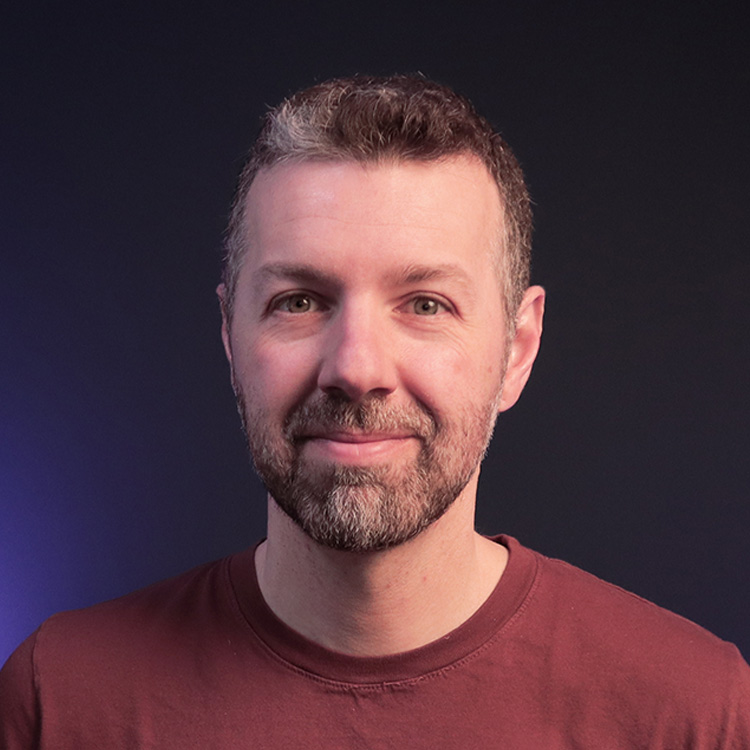
Brian Casel
I'm a full stack founder who has been bootstrapping and building products and services businesses on the internet for over 15 years.
How I can help
I currently work with founders, SaaS, and creators on building and shipping software products. To learn more and check availability, click here.